
As the Blue Jays square off against the Tampa Bay Rays, the city is ready to sport basbeball hats, a pride for our national baseball team, and a tongue-in-cheek groan as traffic around Bremner Boulevard and Rees Street come to a standstill.
If you are an avid baseball fan, or are new to the city of Toronto, the Blue Jays mean much to the city for several reasons:
- The Blue Jays are the only Canadian baseball team in the MLB.
- Their net worth sits at 2.1 Billion Dollars.
- The vested buy-in as to whether Joey Votto will make it to Toronto this April (or this season) warrants a blog on its own.
- Home attendance for the Blue Jays in 2023 passed the three million mark.
While fans in Toronto prepare for another season of revelry in hometown pride, experiencing all nine innings, and engaging in game-time antics with American and Canadian teams, the excitement of the future is palpable.
But what about the past?
If you ever asked yourself questions like:
- “Where did the Blue Jays come from?”
- “Why did they decide on the name of a bird?”
- How did the Blue jays move to the Rogers Stadium today?
Read on to find out more about Toronto’s favourite (and only) baseball team!
The Genesis of a Team – The Godfather of Toronto’s MLB
Baseball is not the monopoly of the Blue Jays. In the 1950s, the Maple Leaf franchise saw Toronto make plays in the minor leagues, contributing to much success. Under the ownership of Jack Kent Cooke, the baseball team saw progress but was unsuccessful in joining the MLB.
According to a post on TVO Today, North York councillor Paul Godfrey was the one later championing the cause for Toronto to join an MLB team. Pursuant to his vision, he picked up the conversation in Florida with baseball commissioner Bowie Kuhn, who informed him that to even be considered for MLB participation, a worthy stadium of the pomp and ceremony hostingl such games had to be built.
As time moved forward, Paul Godfrey became chairman of Metro Toronto in 1973, which brought him more influence, and access to the ear of then Ontario Premier William Davis.
After a conversation with him, 15 million dollars was brought into play to reconfigure the existing Exhibition Stadium. This marked the first step of the process to bring MLB baseball to Toronto.
Who Dunnit? Who Brought The Baseball Team To Life?
While the stadium was set up, it was only a temporary solution. Godfrey acknowledged the location wasn’t ideal because:
- Traffic would plague the area.
- The sightline left something to be desired.
- The location wasn’t central.
The stadium was in place. The pressure was on. Now, the MLB needed to consider Toronto as the next city to expand to. Admittedly, Toronto was a highly desirable city. There were more pressing matters, however, for the MLB.
During the 1973 season, many cities drew under a million fans. There were two things specifically stopping Toronto from joining the roster of cities in the MLB.

One was a lawsuit filed by the City of Seattle against the American League, where many believed a new team could resolve things. The second was that Kuhn also believed Washington D.C. deserved a new team.
In Toronto, many contenders were vying for the prize of Toronto’s MLB team including Sydney Cooper, the president of C.A. Pitts Engineering Construction Ltd. and Lorne Duguid, a former NHL player and executive with Hiram Walker & Sons Distillery.
Something significant happened at the same time. Labatt, a famous consortium of brewers discovered research that would change things forever. They learned that sponsoring a baseball team was the most profitable thing they could do. First, the seasons overlap with summer drinking would see many results circle back fruitfully. Second, their competitors weren’t sitting still. Molson sponsored Hockey Night in Canada, while Carling O’Keefe worked with the CFL.
This would also reach Toronto eyeballs and boost employee morale (Who doesn’t want to sponsor a baseball team?!). The fear of government crackdowns was also tangible. Allying with a baseball team was a great promotional vehicle in case beer advertising faced the government who already was policing tobacco and hard-liquor).
According to a publication titled Labatt: A Closer Look, courtesy of Western University’s library, another issue plaguing the team was that it wasn’t known as a Canadian brand. Known for making good beer and that was it, the 1970s convinced Labatt to make a bid to bring a Major League Baseball team to Toronto.
That said, it wasn’t so easy.
Players. Baseball. Political Bases.
Labatt President Don McDougall took a newly found interest in baseball. Conversations were had with many teams including the Baltimore Orioles and the St. Louis Cardinals. Rumours and hearsay were circled “A new baseball team heading to Toronto.” Toronto Star’s September 9, 1975 sports section made an announcement that couldn’t be ignored. The San Francisco Giants would move north.
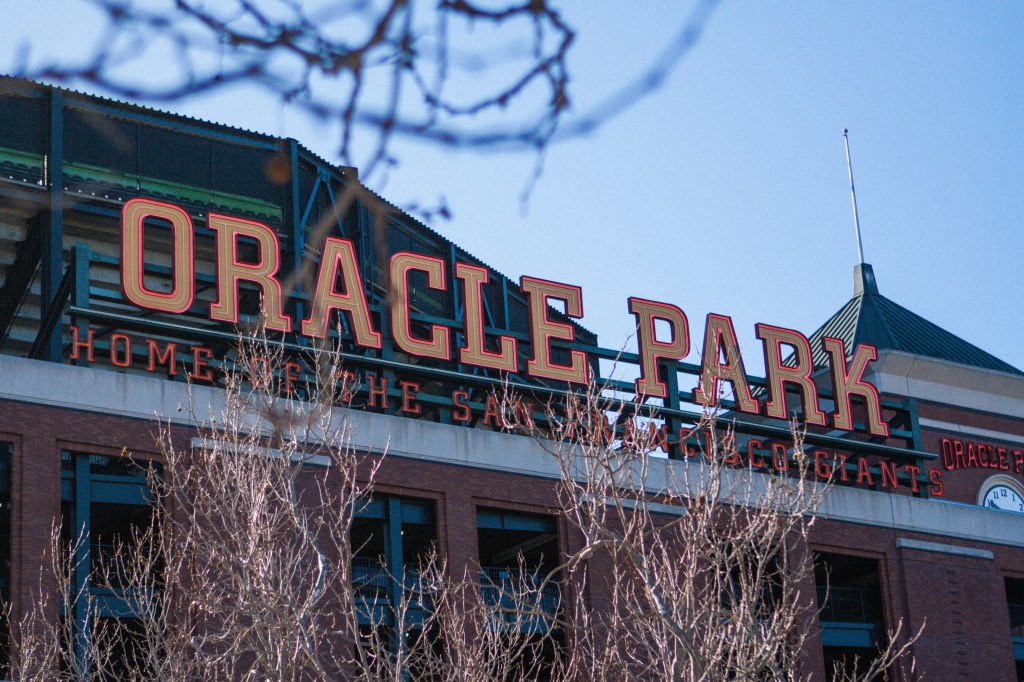
The Giants were founded in New York and then moved to Minneapolis where they played until the owner Horace Stoneham, was persuaded to move to California. That was when they were met with a bad hand which appeared in the form of Candlestick Park.
Candlestick Park was notorious for being cold and windy and the attendance only attested to that. By 1974 the Giants had the worst attendance in MLB history drawing just about 520,000 fans. The fact that the owner faced mounting debts did little to help the situation.
The Giants considered Toronto but couldn’t seal the deal due to many hiccups along the way. The decision was not quick however as many considerations were taken into account. Players were dismayed at having to relocate, and possibly how the shift would affect their families.
Pitcher John Montefusco told the San Francisco Examiner that he was against it as he would never be heard from again. Shortstop Chris Speier didn’t mind as he “already played in the worst stadium.” At the time Chatham native Fergie Jenkins hoped the deal would take place sooner so that he could play closer to home.
In San Francisco, a new mayor George Moscone wanted to keep the Giants in the city. Seattle felt this was unfair to Seattle sports fans. Newspaper reports in Toronto through undisclosed sources were certain the Giants would play in Toronto. Yet in California, Moscone searched for local owners, discussing deals with parties experienced moving the Senators to Texas as the Rangers and the NBA’s lakers to Minneapolis to Los Angeles.
“There have been lots of ups and downs,” Godfrey observed. “We’re going to have a ball team in Toronto, and it’s going to be sooner rather than later. It may be the Giants. It may not be.”
At the end of this, the National League rejected expansion and the American League decided to add another team. The Labatt consortium voiced its desire to take the expansion and on March 26, 1976, the American League chose the Labatt consortium. This almost didn’t happen when Kuhn insisted Washington. D.C., was a higher priority.
He was overruled and thus the way was paved for the team that would eventually become the new Toronto-based MLB team. All seemed well.
Now the team needed a name.
Toronto Bluejays. A Clarion Call to Canadians.
In 1977, the first Toronto Major League Baseball team had the green light (despite all the metaphorical red flags that the MLB seemed to have with Toronto). They were still in search of an identity.
According to an article penned on Mlb.com, the organization opened a contest inviting people to name the team.
There were ever 4,000 different and unique names submitted.
154 people submitted the name “Blue Jays.”
“Toronto Blues” was submitted but discarded as this would confuse Torontonians with the Blues from the University of Toronto. The Toronto Star‘s sports section on Aug. 13, 1976 made the new name official with the message “Blue Jays. Lump it or like it … that’s the name for Toronto’s American League ball club.”
Godfrey himself mentioned that he liked the first part of the name “Toronto Blues.”
President of the Toronto Field Naturalists Club Ron Thorpe voiced he was hopeful that the ball fly as fast as the actual bird.
In total, 154 people submitted the name “Blue Jays” to the naming contest, so a draw was held to name the grand prize winner. Dr. William Mills, periodontist from Etobicoke won two season tickets for Blue Jays home games in 1977, plus a trip to Dunedin, Fla., for one week of Spring Training.
Mill shared the credit with his three daughters. He also mentioned that the Baltimore Orioles and the St. Louis Cardinals used names of birds.
As the new season begins, and the Blue Jays come back into play this year, hopefully, we can take a moment to reflect on just how far we have come as Torontonians and the meaningful impact that all the hard work in bringing the Blue Jays to Toronto has had.
So grab a Blue Jays hat, grab a Labatt Blue, and take pride in the fact that while we do only have Major League Baseball team, they are ours to support.
Sources: How Toronto almost became home to the San Francisco Giants (TVO), Here’s how the Blue Jays got their name (Mlb.com), Forbes
 Toronto With A "T"
Leave a comment